Where Wolves Are Made Of Foam
A few weeks ago, in the Long Lost Friend Studio Patreon, we had a chat about our favorite werewolf/wolf-man movies. Werewolves are a personal favorite of mine, so the chat had me revisiting some of my favorite movies. And with all of those snarling lycanthropes loping through my mind, I got an idea for our next workshop project.
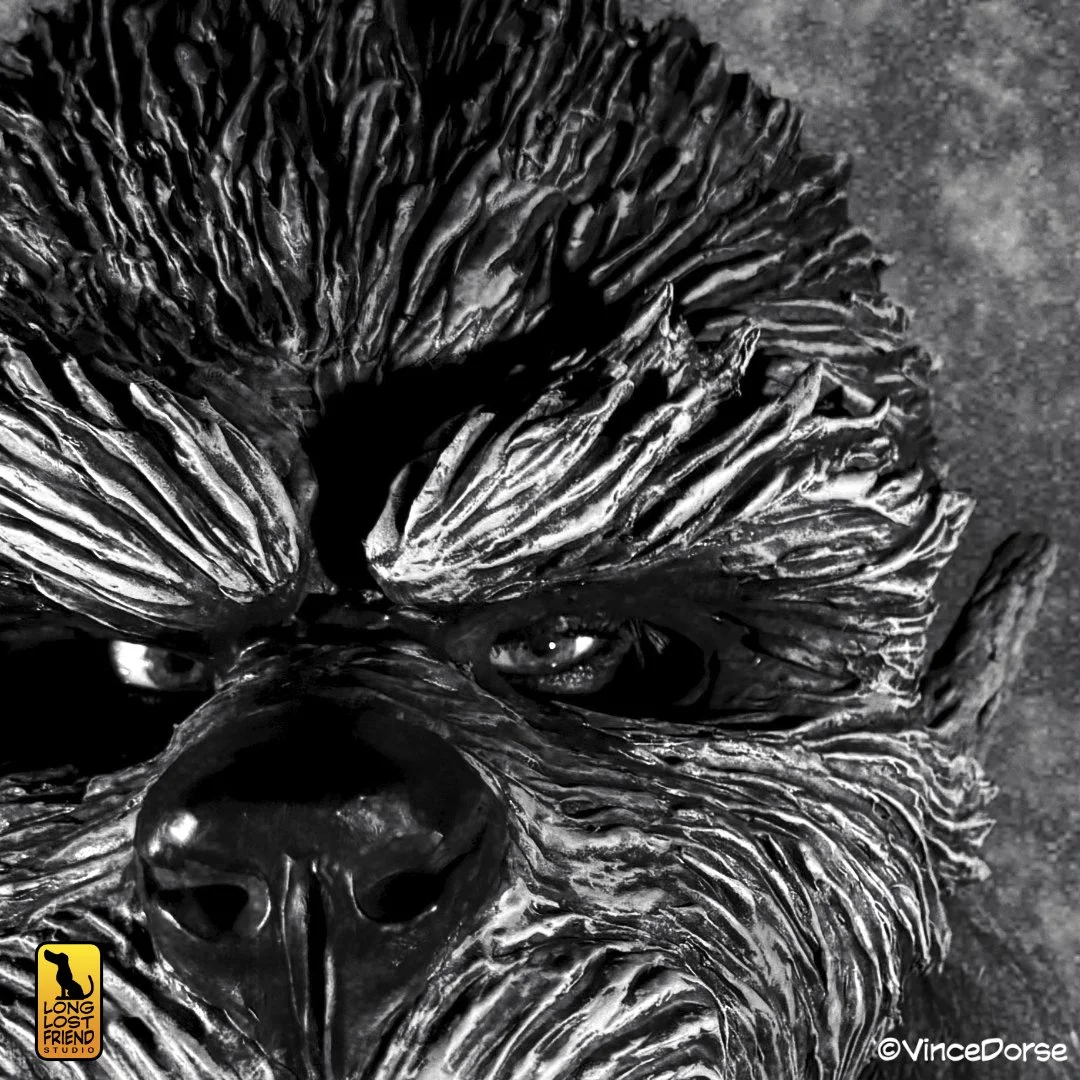
The project was to create a werewolf/wolf-man mask, much in the way we’ve made other masks (The Ventriloquist’s Dummy, Planet of the Apes, The Thing). But this time we wanted to run an experiment. With those other masks, we were always scrambling to find armature material to bulk up the facial features; aluminum foil, papier maché, XPS foam.
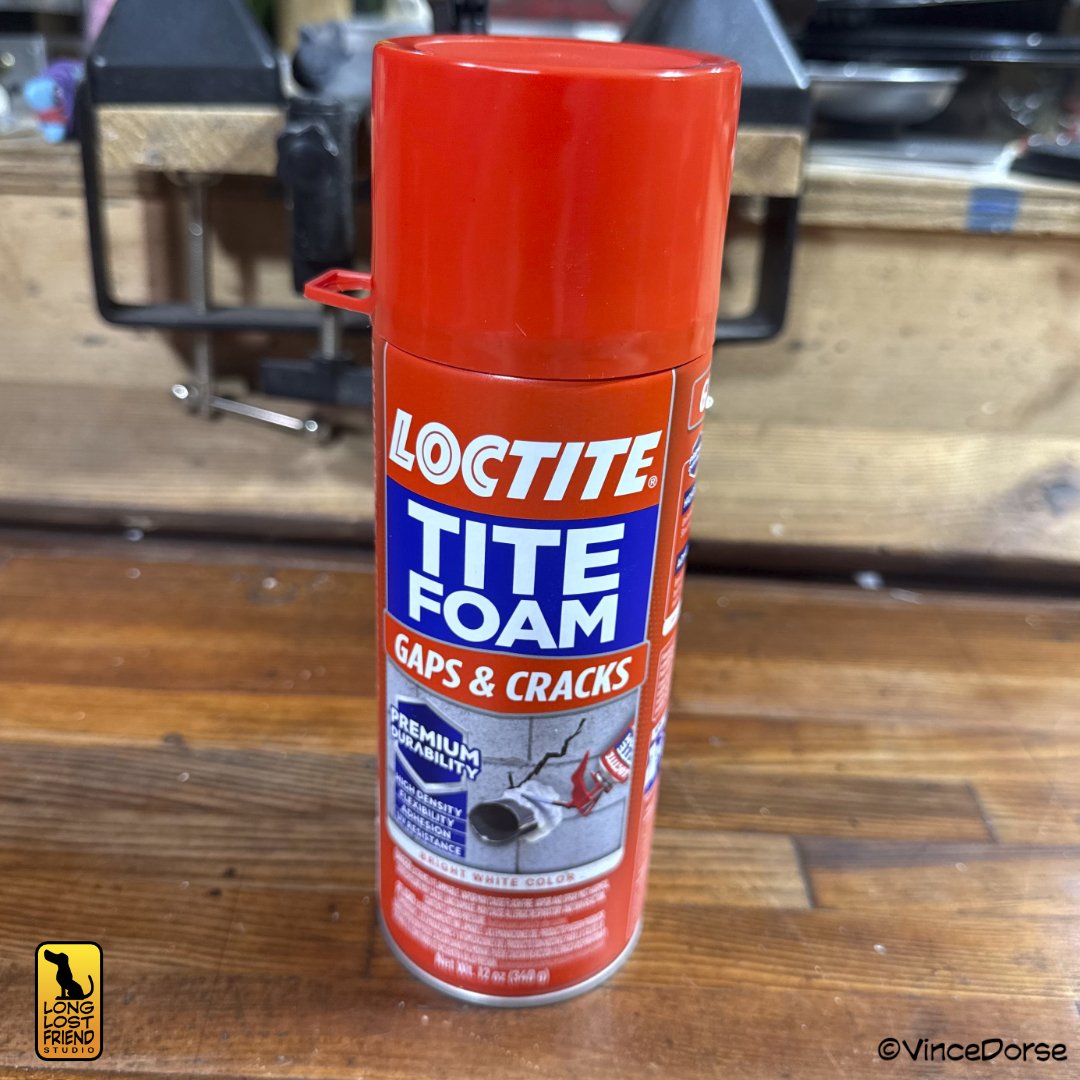
But this time, we wanted to experiment with a new material: Spray Foam. Same stuff you use to patch holes in your walls. We thought we could build up the insulation foam, let it harden, and carve it into shape. Can it be done? Would it work as an armature? Could you finish the mask using only spray foam? We’re going to find out.
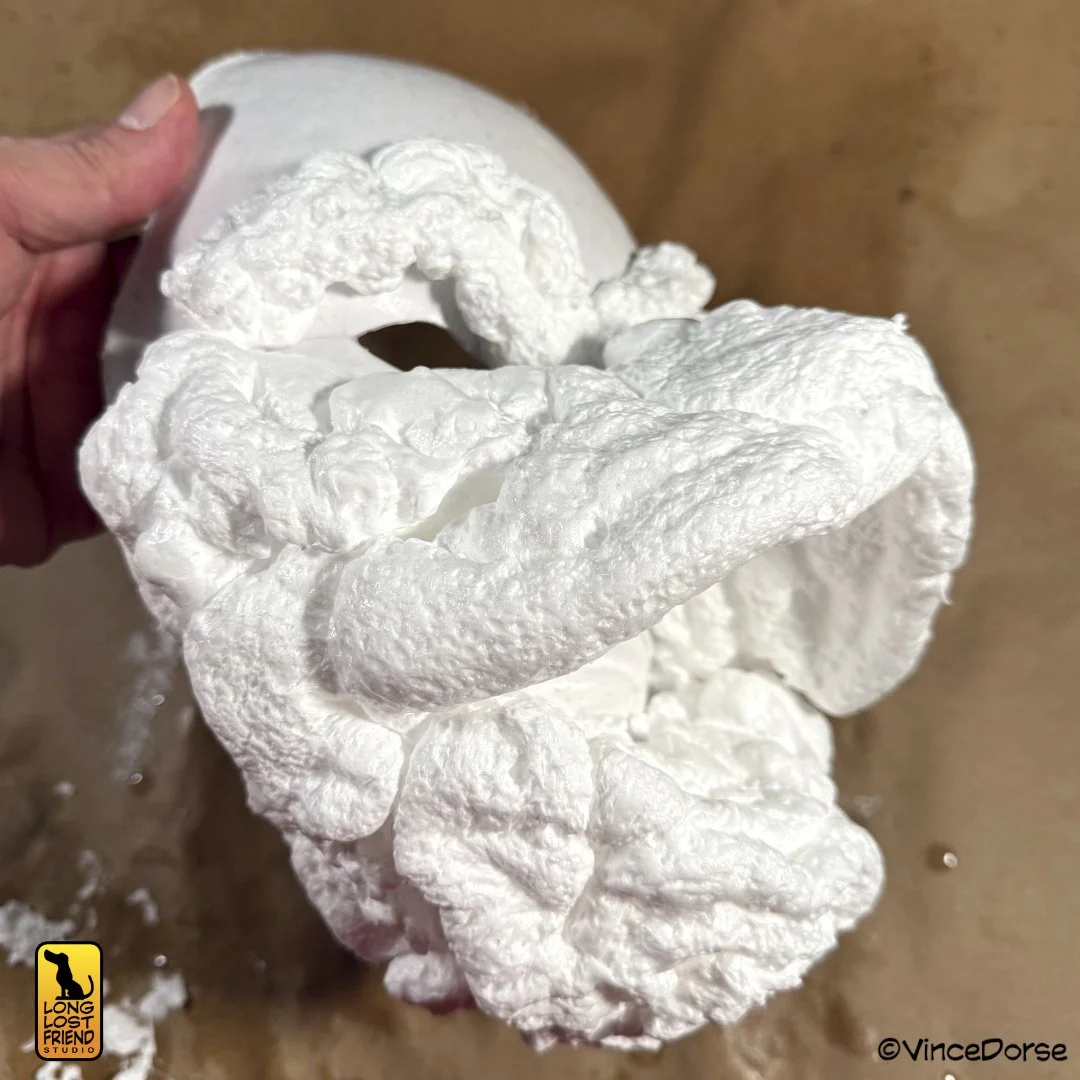
The first thing we found out is that spray foam is hilariously difficult to control. It’s a process of spraying, missing the mark, too much or too little coming out of the nozzle, impossibly sticky foam getting on your hands and tools and workbench. But it was also fun. And the more foam we packed on, the more our werewolf took shape, the more promising this experiment started to look.
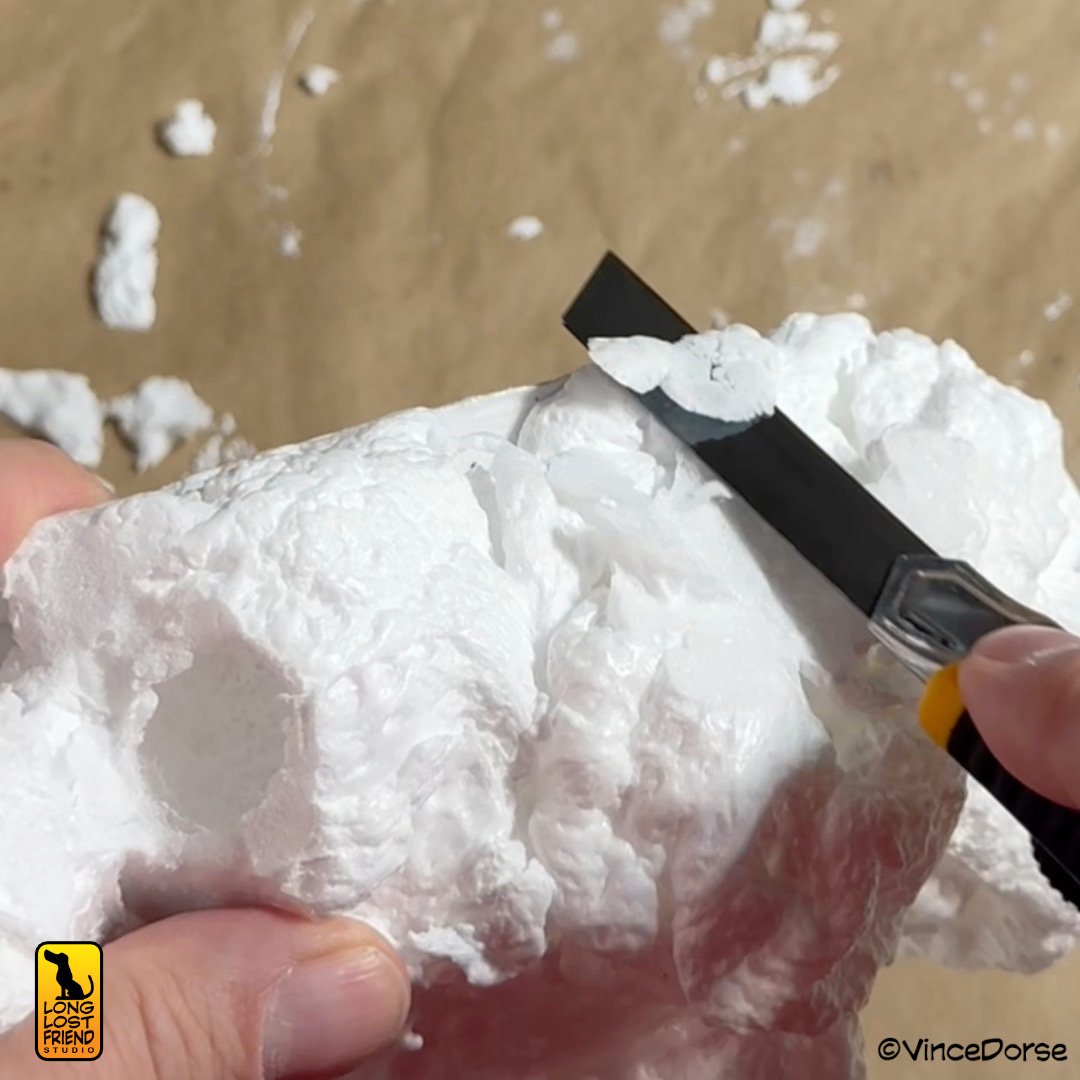
The shaping of the foam was a process of carving, shaving, finding air pockets, refilling them, re-carving them—a time consuming process. But compared to finding ways to glue foil to a paper base mask, it was a walk in the park. And the depth we can achieve with spray foam is greater than we ever managed with the papier maché. And the foam is durable and lightweight. The spray foam method gets a thumbs up from both of us.
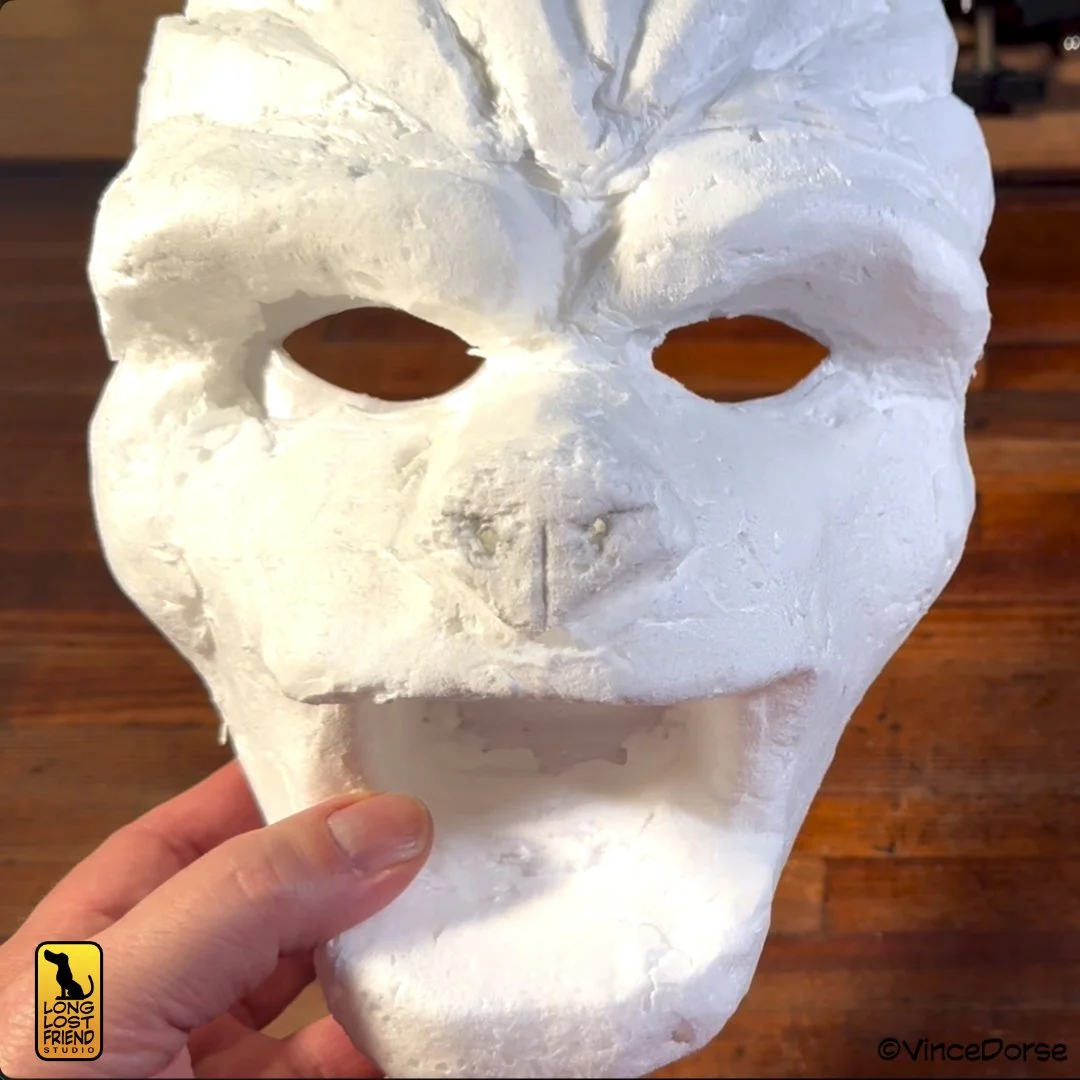
At some point, after carefully sculpting the spray foam into something that resembled a wolf monster, we had a decision to make: Seal it, add teeth, and paint it? Or introduce other materials? If you watch this week’s video, I think you’ll see a case could be made for either option. But since werewolves are one of my favorite monsters, I didn’t want to stop until I was completely satisfied that I did my best to bring this monster to life.
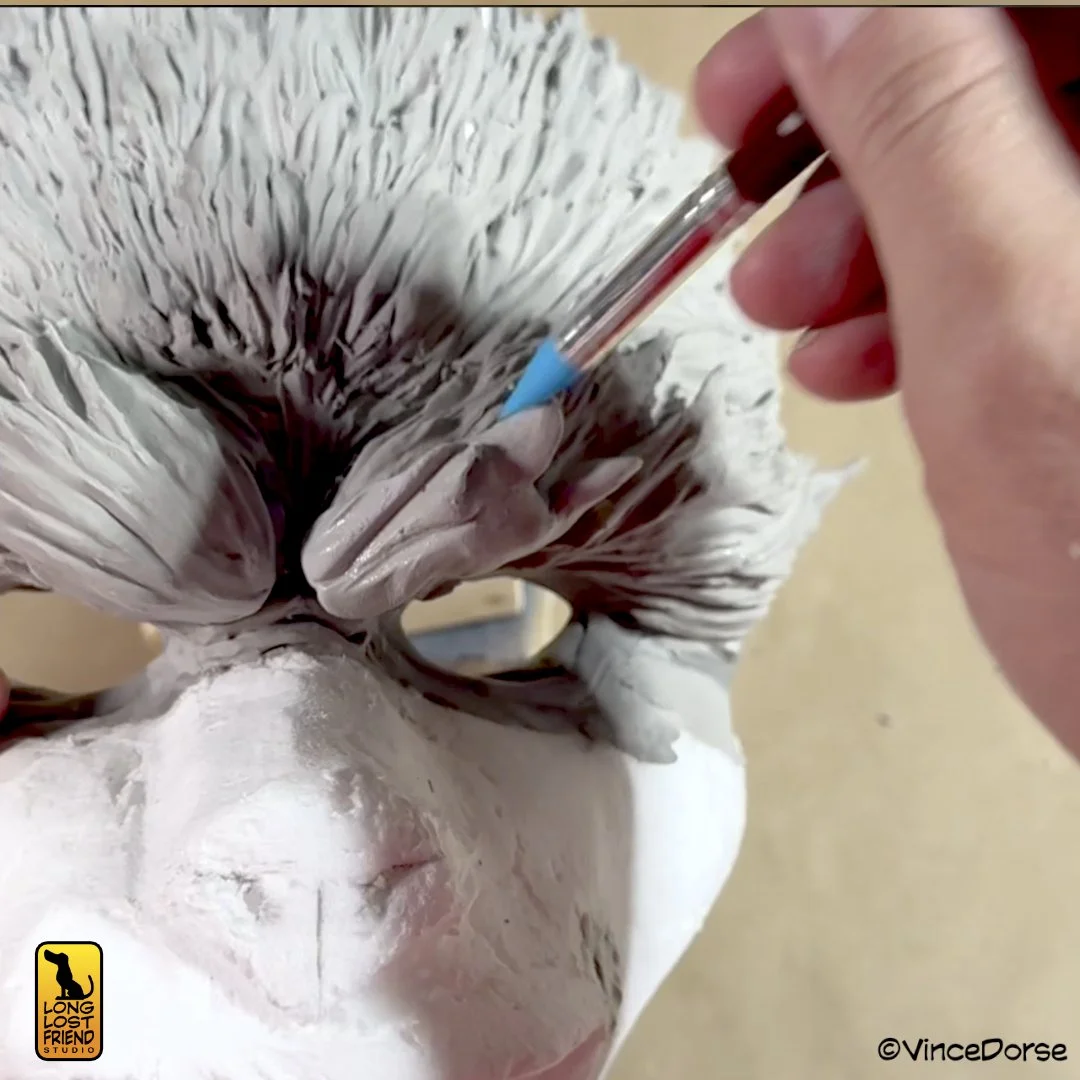
We decided, at first, to add some accents and details with foam clay (a medium we use all the time when we’re making masks). But the more foam clay we put on — well, the more foam clay we put on. It’s a great material to sculpt texture into, and since this wolf-man has a face covered in fur, we decided to go full bore with the foam clay and cover the entire face, thereby turning the spray foam base into a perfectly-shaped armature.
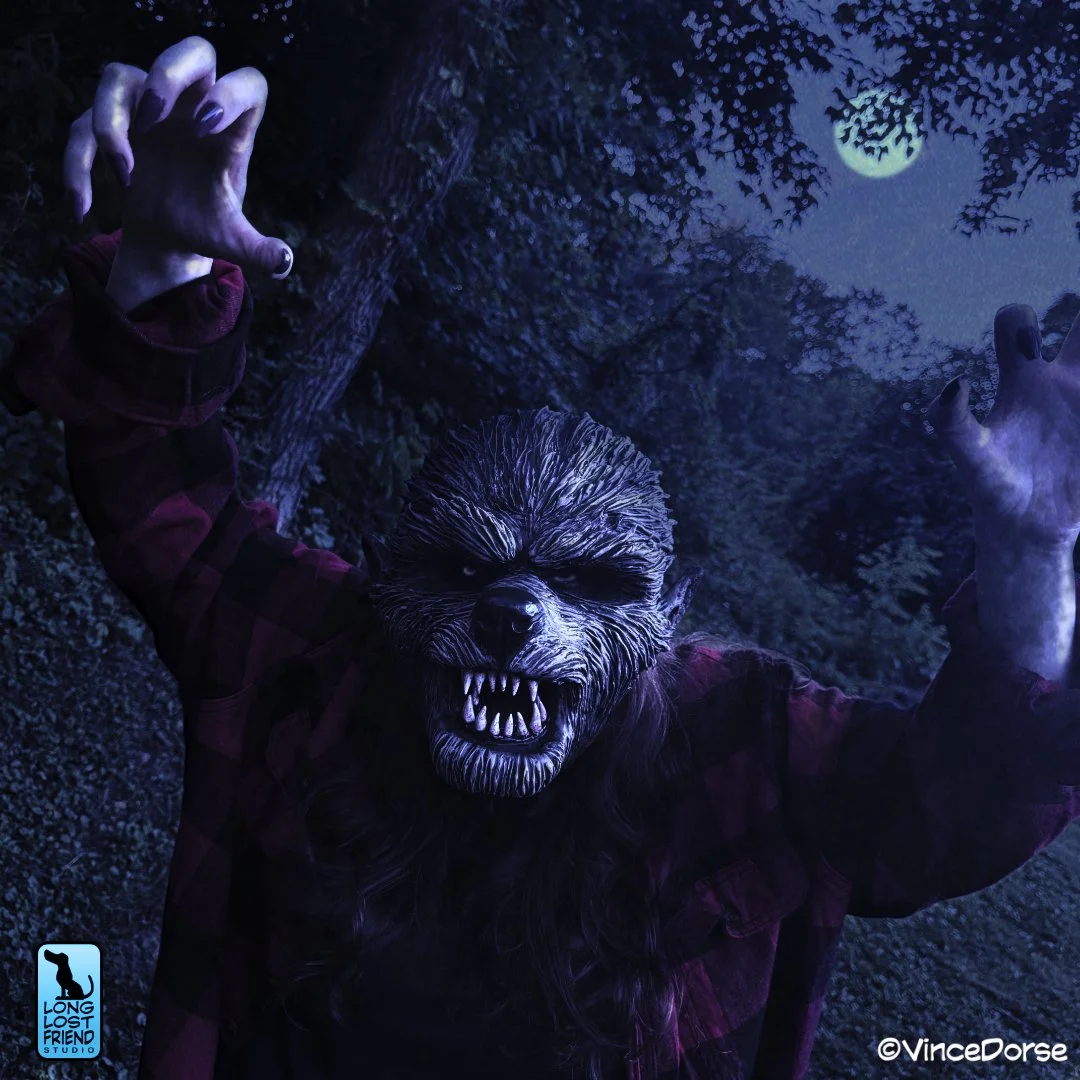
Before this experiment was over, we tried out a few other things we’d never tried before, including a different kind of airbrush, and a specific type of polymer clay. We also ended up buying a whole new type of itch cream to take care of the mosquito bites we were covered in after doing this outdoor photo shoot.
If you’d like access to more in-depth how-to posts about putting this wolf mask together, you can check out the Long Lost Friend Studio Patreon. It’s all about art and creativity and experimentation….and monsters.
And if you’d like to watch us put this mask together, you can watch the video at the link below (also available at our Patreon).